Body armor comes in a few basic forms. Here is how they compare so you can pick the right setup for how you will use it.
Soft armor
Soft armor uses layers of woven or laminated fibers to catch handgun rounds. It is light, flexible and concealable, which makes it the go-to for all-day wear. It is generally rated for handgun threats, not rifles.
Hard plates
Hard plates are rigid panels that stop rifle rounds. They are heavier and ride in a plate carrier. Plates come in three main materials:
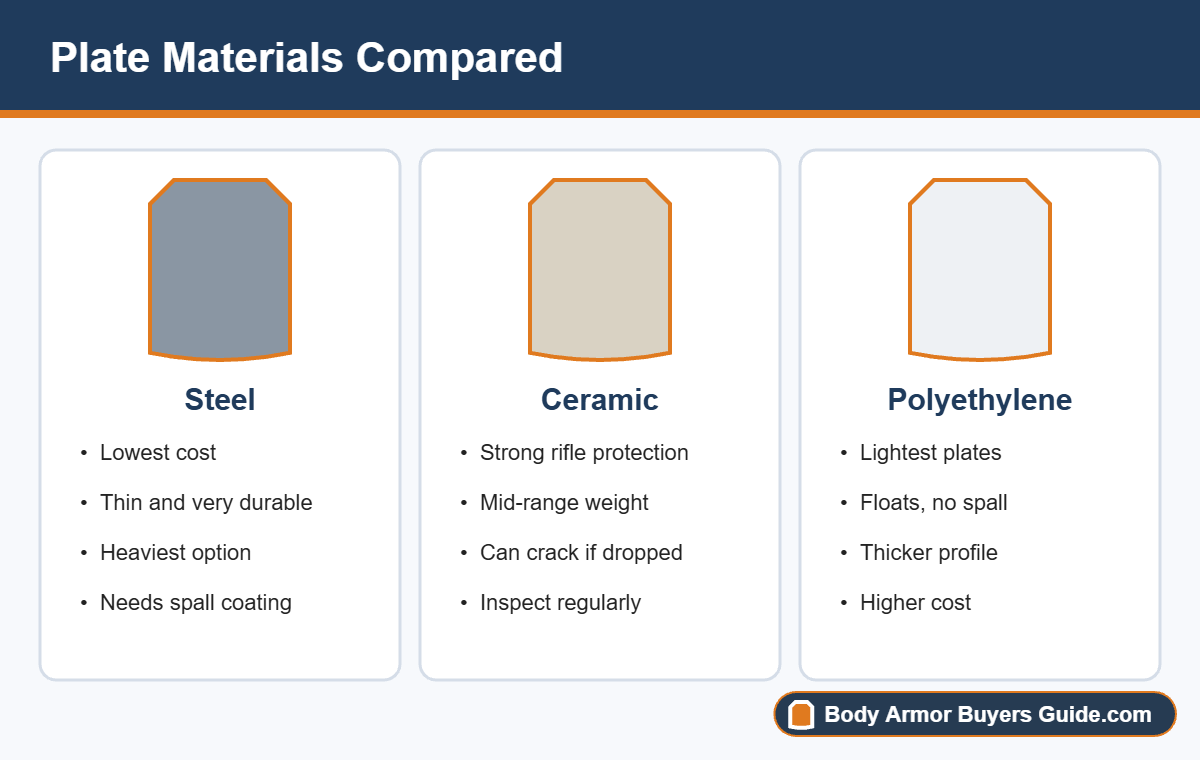
- Steel is the least expensive and very durable, but it is the heaviest and needs a spall coating.
- Ceramic offers strong rifle protection at a middle weight, but it can crack if dropped, so inspect it often.
- Polyethylene is the lightest and floats, but it is thicker and costs more.
Plate cuts
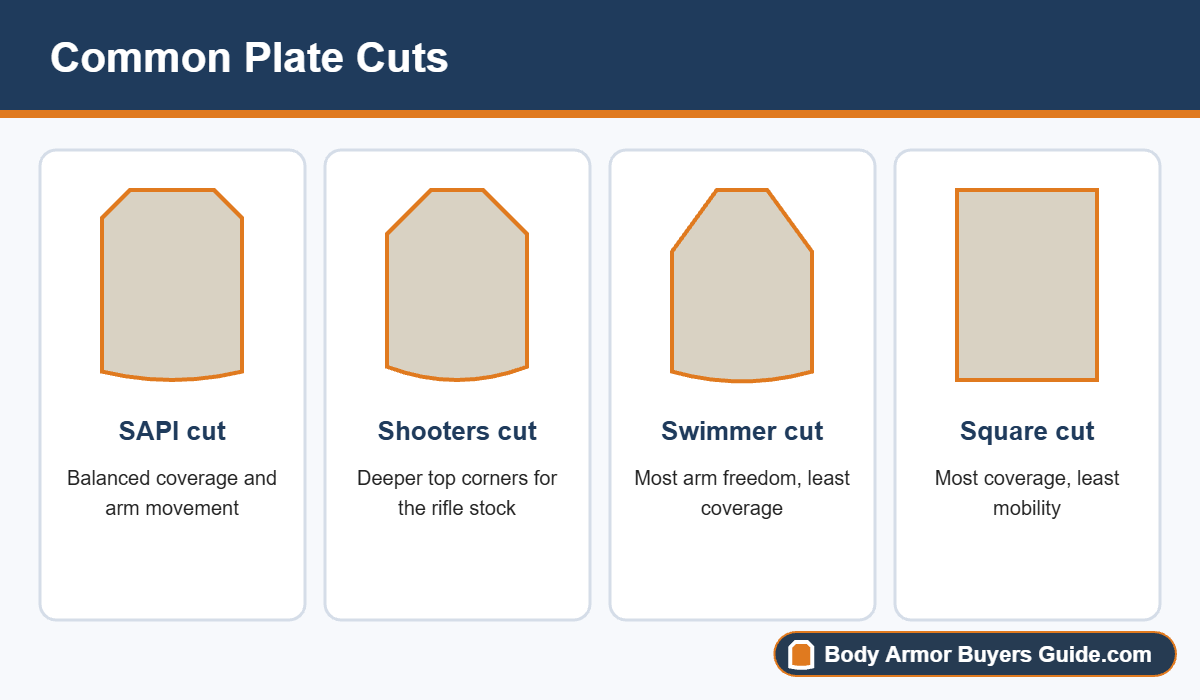
The cut is the shape of the plate. It decides how much coverage you get versus how freely your arms move.
Ways to wear it
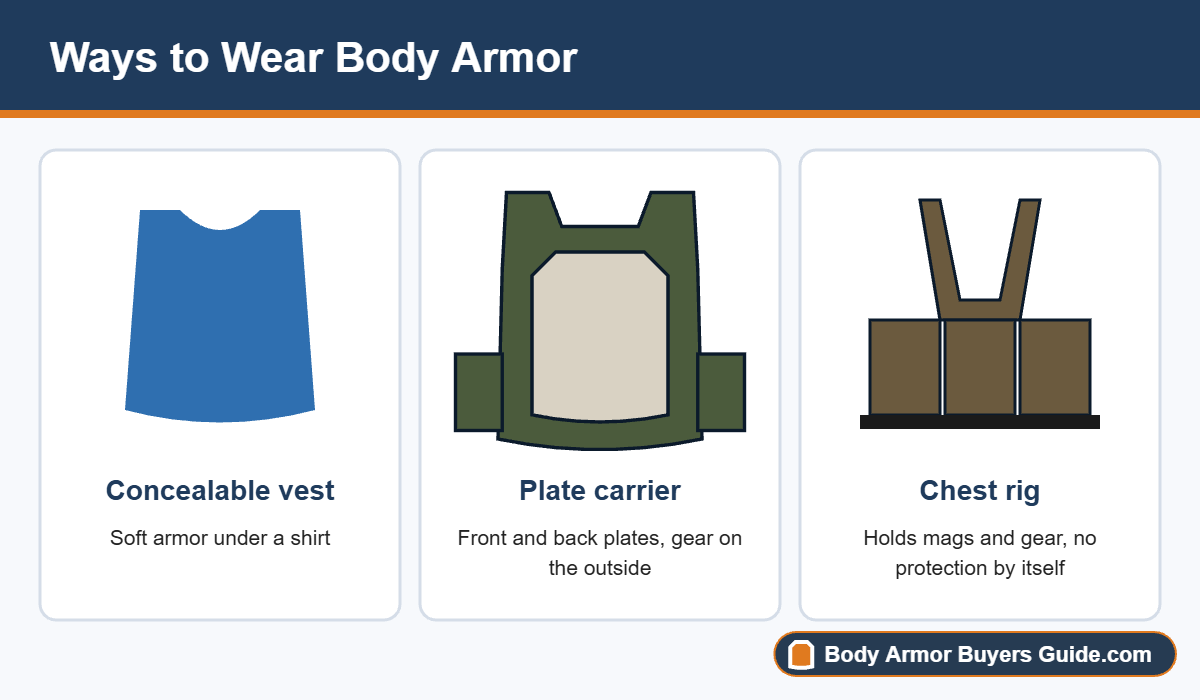
A concealable vest holds soft armor under clothing. A plate carrier holds front and back plates with gear mounted on the outside. A chest rig carries magazines and gear but offers no protection by itself.