Quick answers to the questions we hear most about body armor.
Is body armor legal to own?
In most of the United States, yes. A few states restrict how it can be sold, and federal law bars people convicted of violent felonies from owning it. Check your state and local laws before you buy.
How long does body armor last?
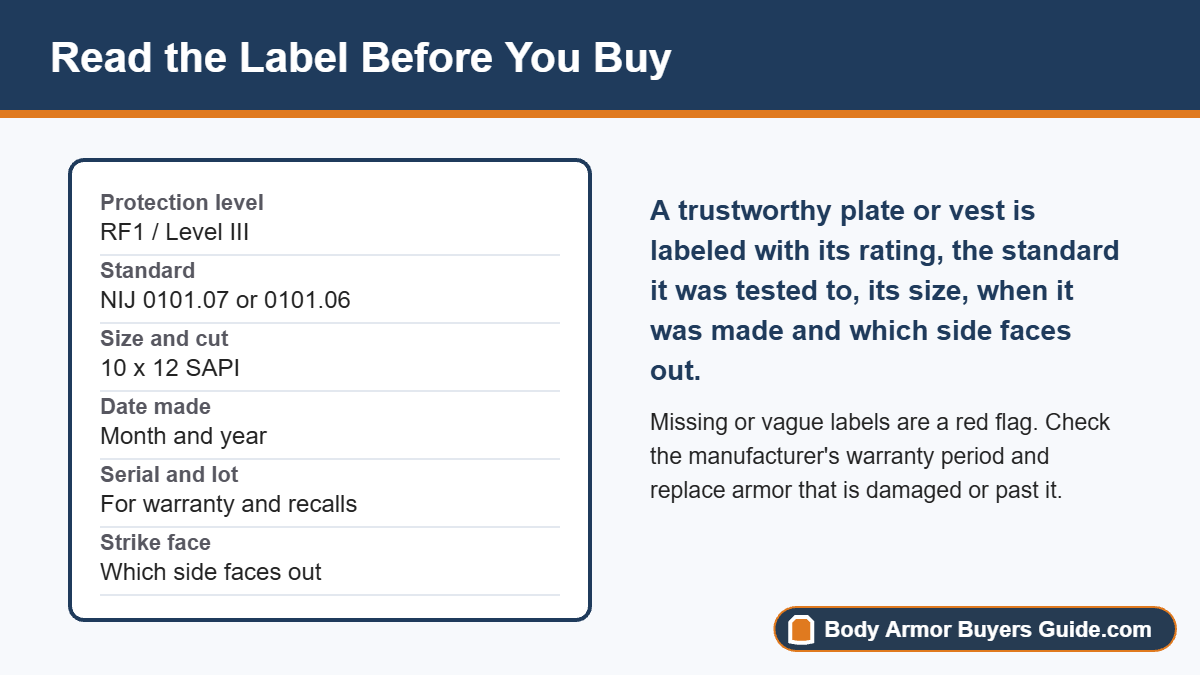
Soft armor commonly carries a five-year warranty because the fibers break down with sweat, heat and wear. Plate warranties vary by maker and material. Check the date on the label and replace armor that is damaged or past its warranty.
Do I need a front and back plate?
Yes, if you want protection from both directions. Many people add side plates later for more coverage.
What is spall?
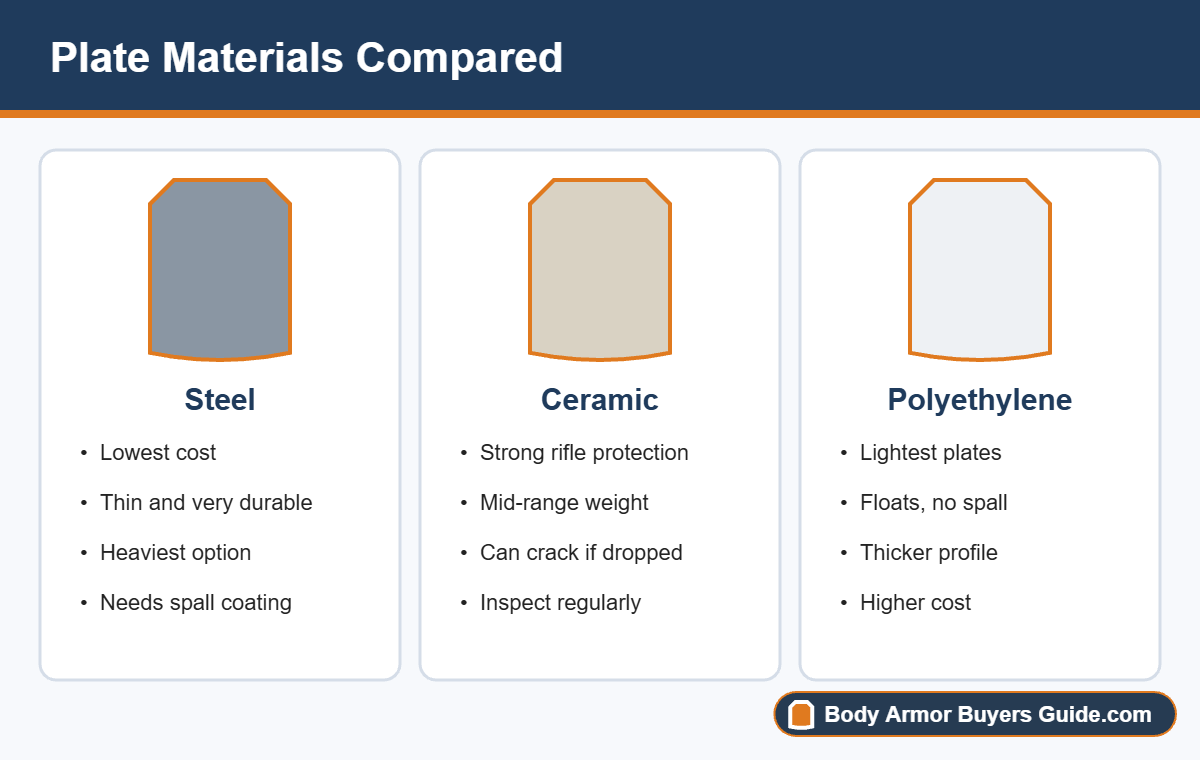
Spall is bullet fragments that spray off the face of a steel plate when it is hit. A spall coating or spall cover catches most of it. Ceramic and polyethylene plates do not create spall the same way.
Will body armor stop a knife?
Not necessarily. Ballistic ratings cover bullets, not blades. If you need stab protection, look for armor tested to the NIJ stab standard.
What size plate do I need?
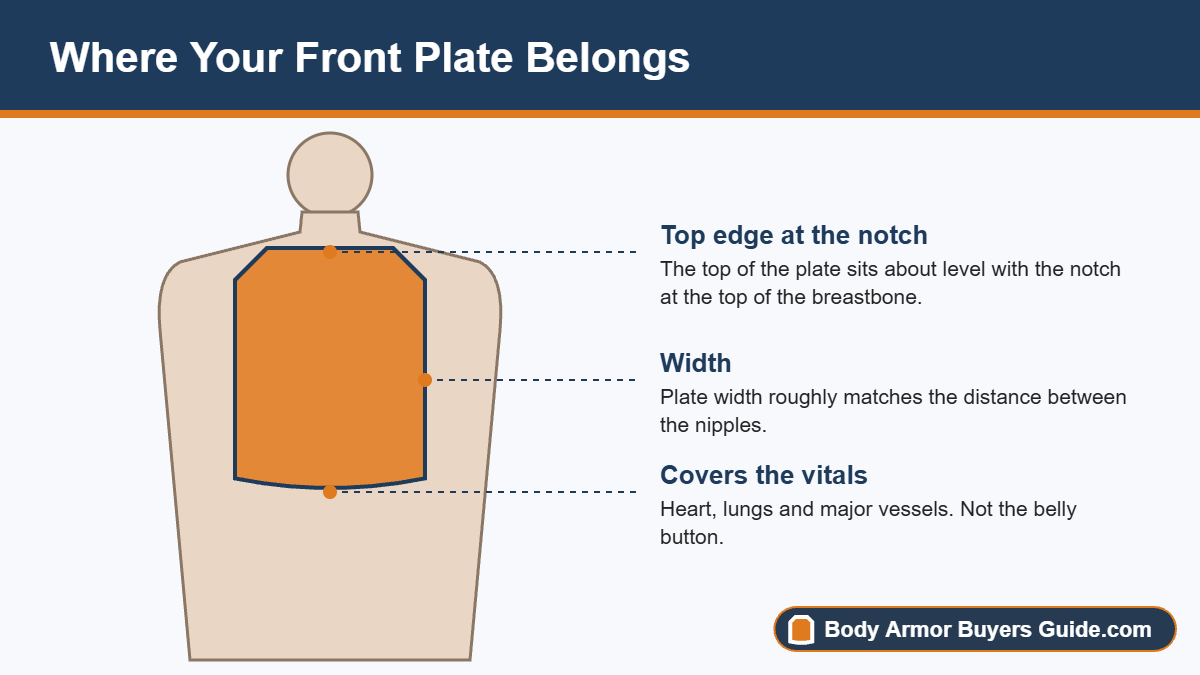
Most adults fit a medium 10 x 12 plate. The width should roughly match the distance between your nipples, with the top edge near the notch at the top of your breastbone.
How heavy is a plate setup?
It depends on material and level. Polyethylene plates are the lightest, ceramic sits in the middle and steel is the heaviest. Add the carrier, magazines and gear and a full rifle setup gets heavy fast, so train with it before you need it.