Body armor ratings tell you which bullets a vest or plate was tested to stop. The names changed when the NIJ released Standard 0101.07, so you will see both old and new labels on the market.
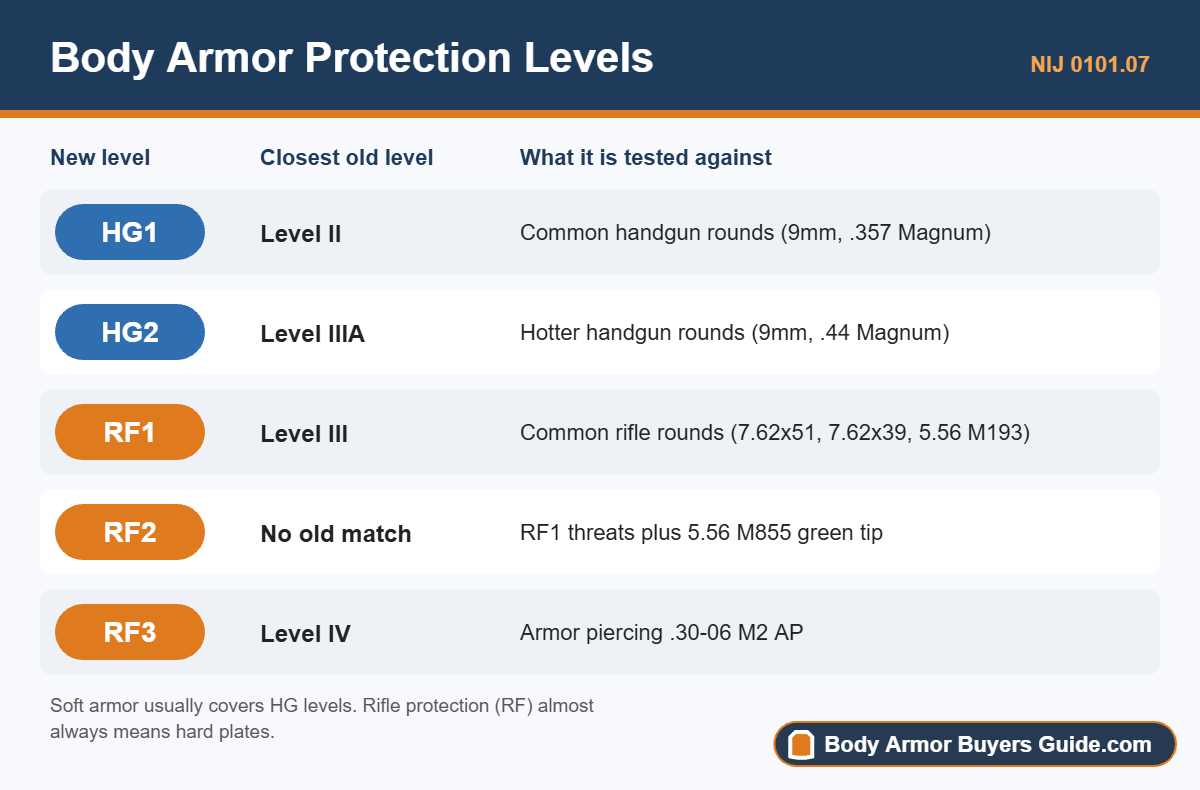
Handgun levels: HG1 and HG2
HG1 lines up with the old Level II and covers common handgun rounds. HG2 lines up with the old Level IIIA and covers hotter handgun loads. Both are usually soft armor you can wear under a shirt.
Rifle levels: RF1, RF2 and RF3
- RF1 is close to the old Level III and covers common rifle rounds like 7.62×51, 7.62×39 and 5.56 M193.
- RF2 is new. It covers everything in RF1 plus 5.56 M855 green tip, a gap the old Level III did not address.
- RF3 is close to the old Level IV and is tested against armor piercing .30-06.
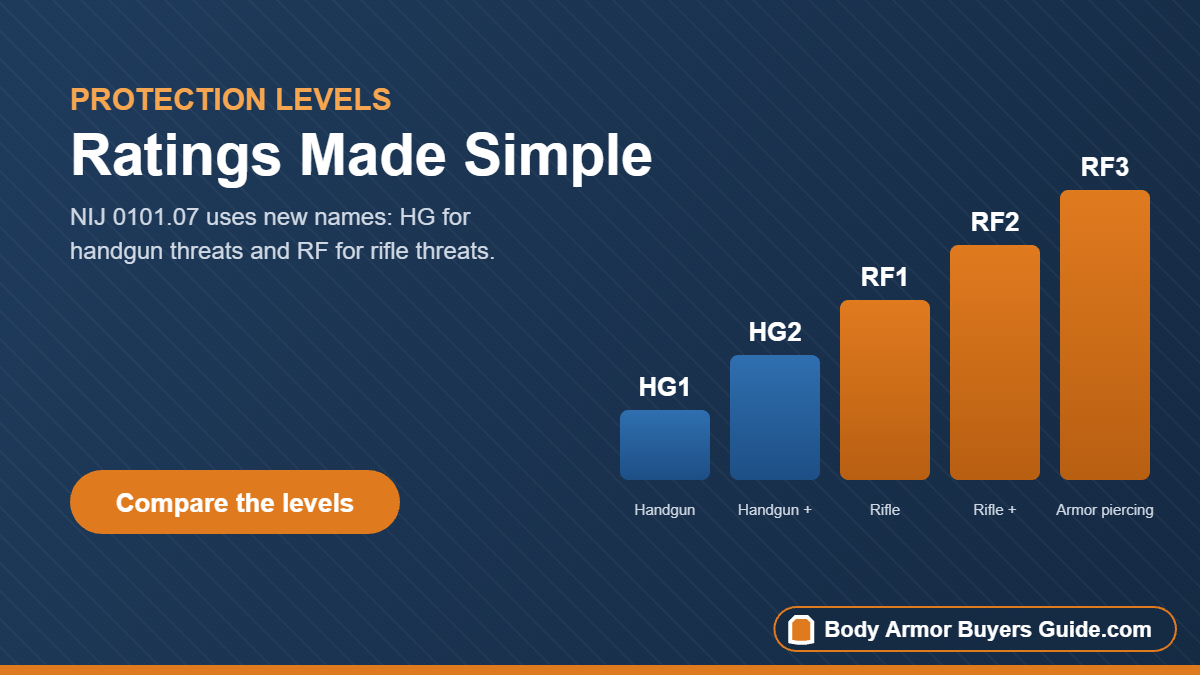
Old labels are still valid
Armor certified under NIJ 0101.06 stays on the compliant products list during the transition, so a Level IIIA vest or Level III plate is not obsolete. Expect to see both standards on labels for years.
Stand-alone or ICW?
A stand-alone plate earns its rating by itself. An ICW (in conjunction with) plate only meets its rating when worn over a specific soft armor panel. If a plate is ICW, the label should say which panel it was tested with.
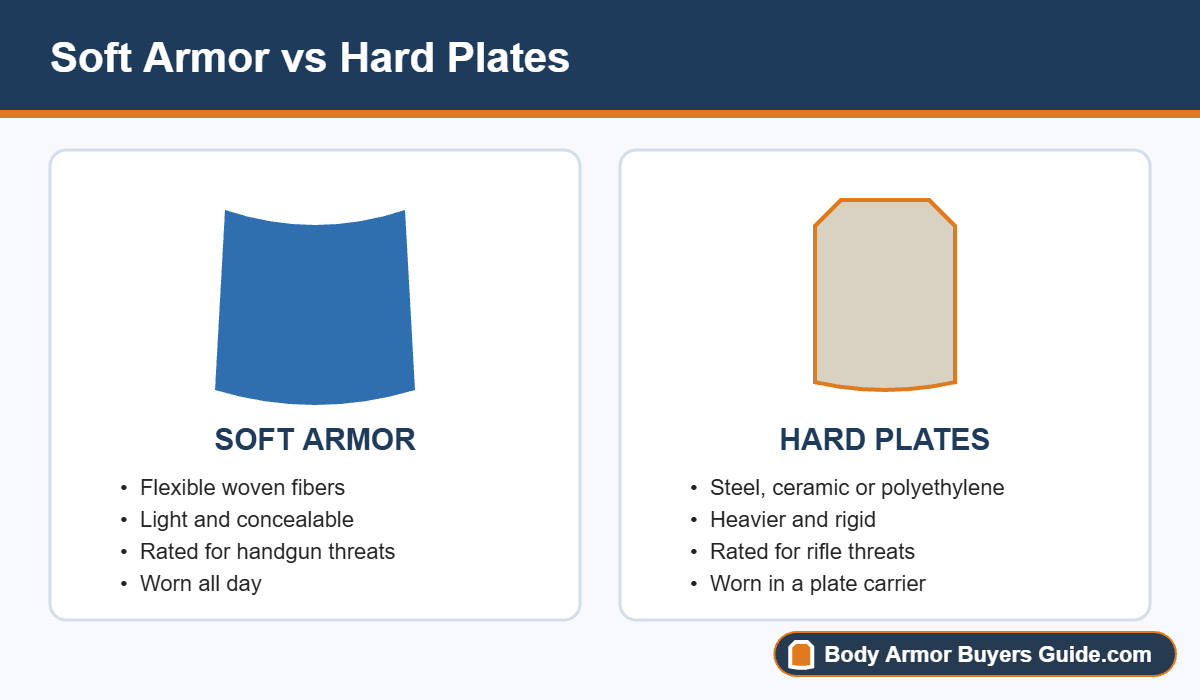
Read the label
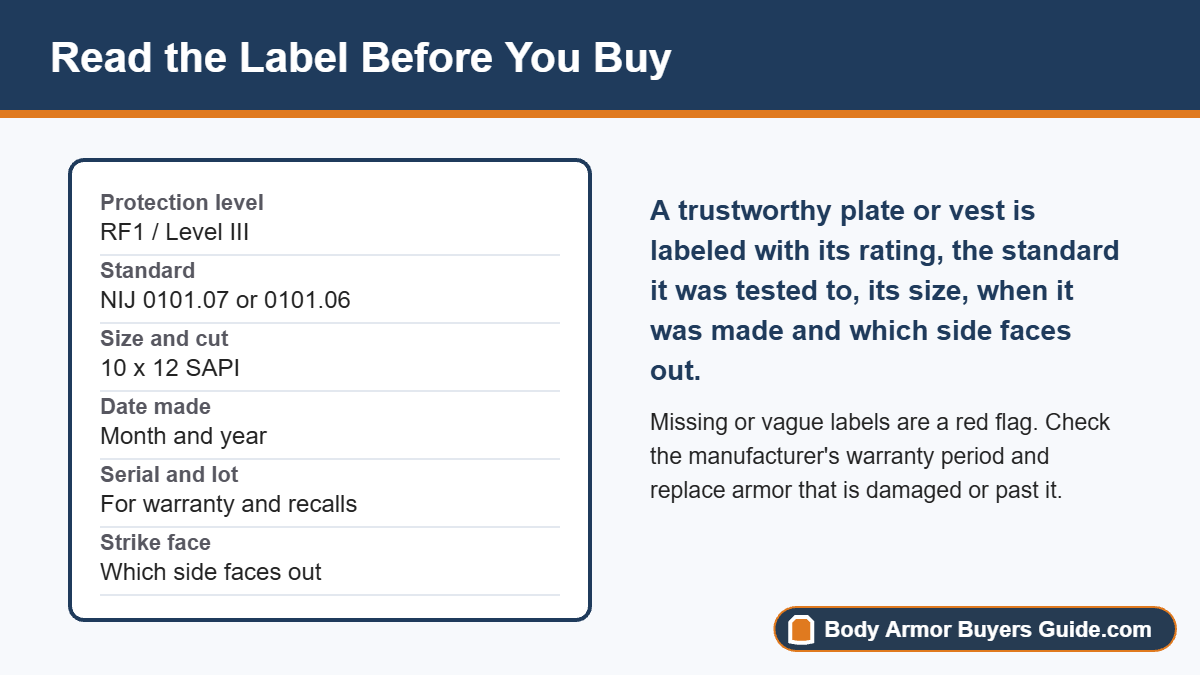
A trustworthy label lists the level, the standard, size, date of manufacture, serial or lot number and which side is the strike face. Vague or missing labels are a red flag.