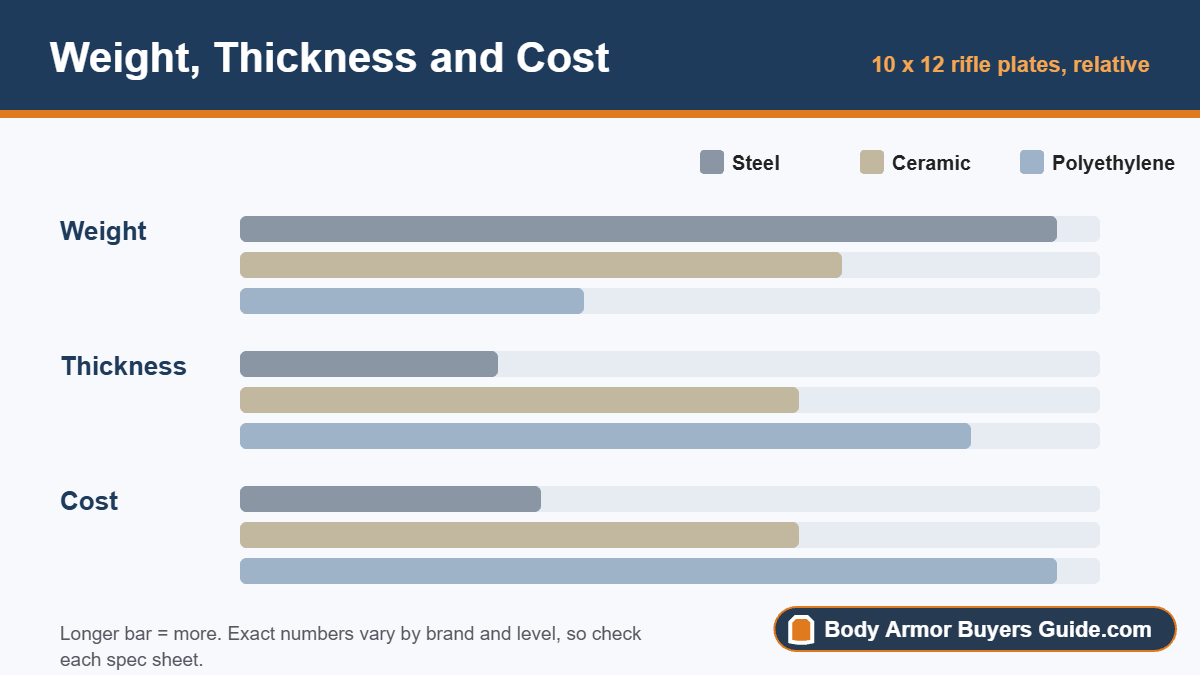
Every rifle plate is a trade between weight, thickness, durability and price. Here is how the three main materials stack up.
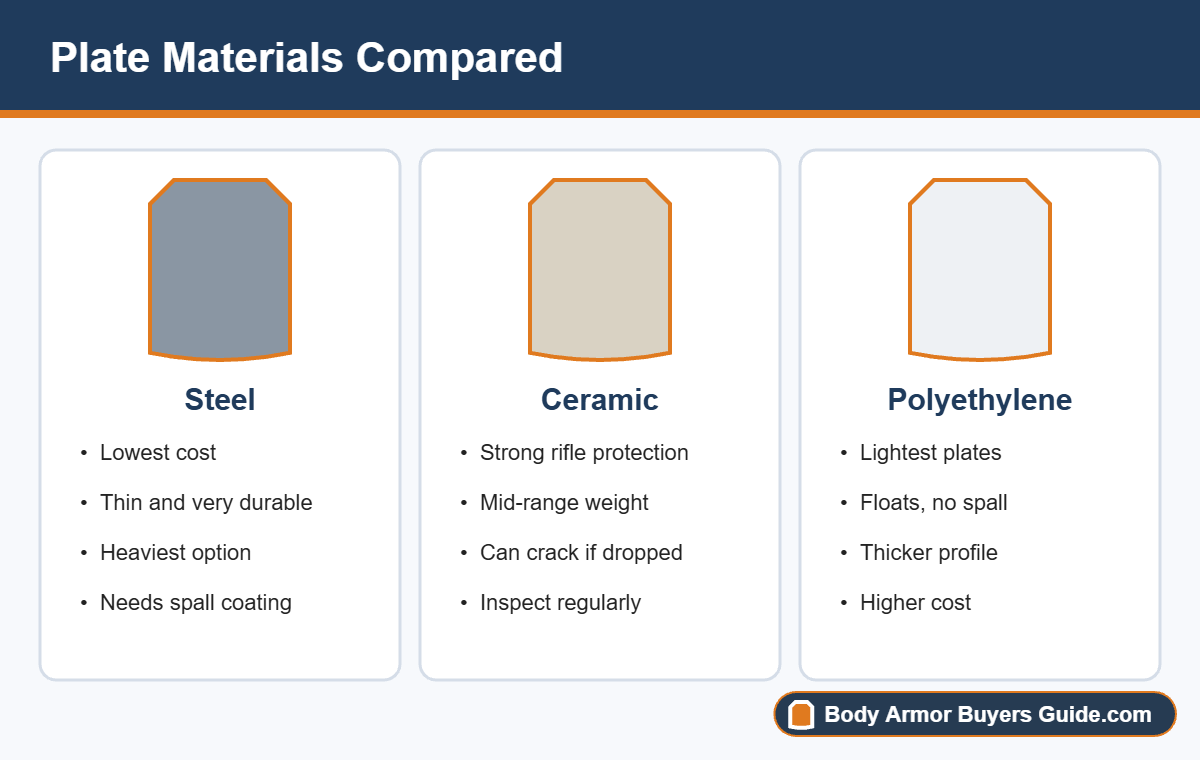
Steel
Steel plates are the most affordable and the most durable. They are thin and can take many hits, but they are heavy and throw fragments (spall) when hit. A good spall coating is a must.
Ceramic
Ceramic plates use a hard ceramic strike face over a fiber backer. They stop strong rifle threats, including some armor-piercing rounds, at a middle weight. They can crack if dropped, so inspect them often.
Polyethylene
Polyethylene (UHMWPE) plates are the lightest and do not create spall. They are thicker and usually cost more, and they do not stop as many high-velocity threats as ceramic at the same level.
Which one is right?
- Tight budget, range use: coated steel.
- Best protection for the weight: ceramic or a ceramic hybrid.
- Lightest possible setup: polyethylene.
Videos
(Visited 1 times, 1 visits today)